Rebranding vs. New Branding: When Do You Really Need Which?
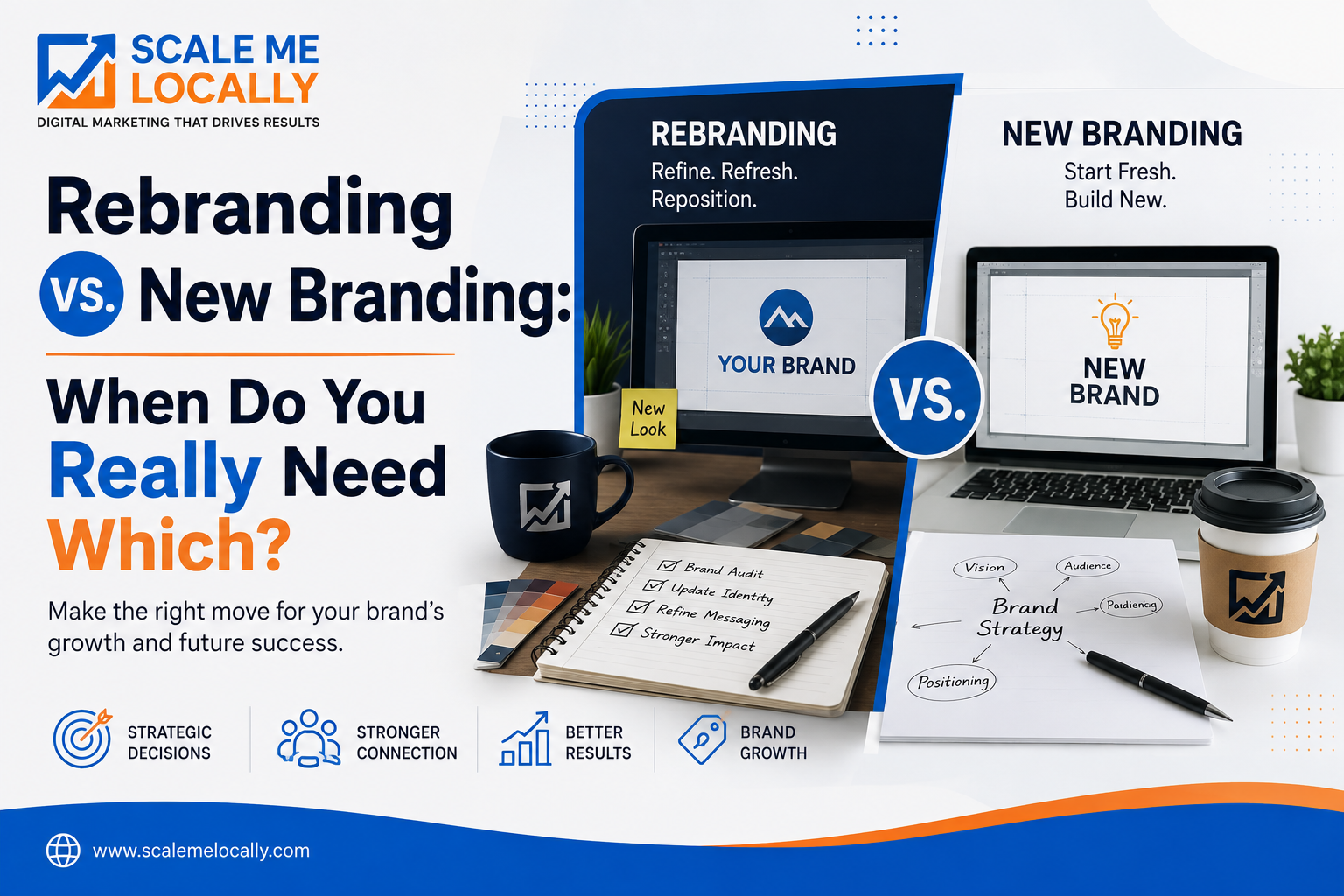

Every growing business eventually reaches a critical strategic inflection point. The image you project no longer matches what you deliver. Perhaps your corporate logo looks like an ancient visual relic. You started out making handcrafted products inside your home kitchen. Now you fulfill massive wholesale orders for nationwide retail chains. Or maybe you are launching a completely fresh business venture. You wonder whether to leverage your existing reputation or start fresh.
The question is: rebranding vs new branding — when do you need it? Both paths involve visual design, messaging, and strategic market positioning. However, they represent radically different moves for your entire company. Picking the wrong strategy can ruin years of hard-earned trust. Alternatively, it anchors new ventures to irrelevant old legacy baggage.
Let us break down the main differences between these strategies. We will explore clear indicators for when you need each. Finally, we offer a practical framework to make the call.
Understanding the Core Strategic Difference
To decide wisely, you must understand what each approach entails.
What is Rebranding?
Rebranding modifies or completely overhauls an existing brand identity strategically. It takes an established business with existing customer awareness history. Then it updates how the business looks, speaks, and positions. You work directly with an entity that already holds equity. The goal centers on altering market perception without losing buyers.
Rebranding moves along a broad strategic spectrum for growing businesses:
· Brand Refresh: Subtle evolution like updating fonts or modernizing primary visual logos.
· Partial Rebrand: Updating messaging and positioning while keeping the main brand name.
· Full Rebrand: Complete pivot changing company names, missions, and target markets.
What is New Branding?
New branding creates a brand identity from a clean slate. There is no historical brand equity to protect or preserve. You manage zero existing customer expectations or legacy company reputations. Instead, you build visual assets, brand voice, and values fresh. You start completely from zero without any prior operational history. This path demands creative energy to capture initial buyer attention.
| Strategic Dimension | Rebranding | New Branding |
| Starting Point | Existing brand equity and historical customer market awareness | Clean slate with zero prior operational market footprint |
| Primary Objective | Evolve customer perception, modernize visuals, or realign focus | Establish initial identity, market trust, and brand recognition |
| Core Risk | Alienating loyal existing customers while losing earned search equity | High friction gaining initial audience attention completely from zero |
| Implementation Effort | High complexity updating every legacy customer touchpoint systematically | High creative effort building foundational identity and go-to-market strategies |
When Do You Need Rebranding?
Rebranding should never happen just because a founder feels bored. It is a major operational process requiring a thorough audit. However, executed correctly, it injects fresh energy into plateauing companies.
Here are primary operational scenarios where rebranding becomes mandatory today:
1. Your Business Model or Audience Has Shifted
Businesses naturally evolve over long periods of active market operation. You may have started out targeting local small business owners. Over five years, your primary clients shifted toward enterprise corporations. If your branding feels casual, it hurts high-value sales deals. A budget agency image stops corporate buyers from signing contracts. Rebranding realigns your public image with your actual modern demographic.
2. Your Visuals and Voice Are Outdated
Design trends change, while visual aesthetics slowly decay over time. Identities crafted a decade ago look clunky on modern displays. Mobile app icons and digital ads require clean, minimal geometry. Your competitors look sleek while your website feels like history. Old typography makes clients think your technology is equally outdated. A visual refresh quickly restores immediate commercial credibility and trust.
3. You Are Navigating Mergers, Acquisitions, or Spinoffs
When two companies merge, separate brand identities cause buyer confusion. Clients struggle to understand which service team handles their account. Rebranding lets you fuse distinct corporate cultures into one story. You create a single powerful identity that represents combined strengths. Alternatively, it establishes a parent brand unifying all new acquisitions.
4. You Need to Overcome a Negative Public Reputation
Sometimes an existing brand carries severe historical baggage from mistakes. Public controversies, operational errors, or trademark disputes ruin customer trust. Bad customer press can permanently damage your existing domain name. When customer trust breaks completely, a full rebrand becomes necessary. Changing identity isolates core business value from the old name.
Strategic Insight: Never abandon core equity if your customer sentiment remains positive. A light visual refresh is better if trust stays intact.
When Do You Need New Branding?
Starting completely fresh is simpler than untangling Legacy Company messaging. Building from scratch gives freedom to shape public perception immediately. You construct a brand story without battling old customer opinions.
You need new branding under the following business scenarios:
1. Launching an Entirely New Company or Startup
Bringing a brand-new business to market requires a clean foundation. You hold no past baggage, existing web traffic, or reputation. You naturally build primary logos, palettes, websites, and stories fresh. Every operational piece must focus on gaining quick initial traction.
2. Creating a Standalone Sub-Brand or Product Line
Established companies need new branding when targeting drastically different customers. Your main brand might represent premium luxury enterprise software platforms. Launching a low-cost self-serve app requires a totally different voice. For example, luxury automakers launching budget electric scooters face risks. Using the main luxury name dilutes prestige and confuses buyers. Creating a distinct sub-brand protects both distinct corporate assets.
3. Making a Complete Break From Past Business Equity
You might pivot your core business model away from past offers. Perhaps you sold physical books but now sell cloud software. If your new offer shares zero overlap with past customers, preserving old identity offers no strategic value for future growth. Dragging old brand associations along will only confuse new buyers. Launching new branding creates a clear, clean break from history.
The Decision Framework: How to Choose
Evaluate your current position carefully using three core strategic criteria:
1. Brand Equity Assessment: Do buyers actively search for your company by name online? Do you hold strong organic search rankings and media backlinks? High domain authority and positive reviews are valuable business assets. If yes, choose a rebrand or refresh to preserve equity. If your current name carries zero recall, pick new branding.
2. Audience Overlap: Will your future offerings sell to the same customer base? Are your existing buyer personas buying this new service line? If target demographics remain consistent, rebrand to keep them engaged. If your offer targets completely new people, launch new branding.
3. Operational Migration Costs: Rebranding requires updating legal filings, web domains, and signage. You must also execute complex redirect mapping to protect rankings. Calculate the total labor hours required across all company teams. If migration costs outweigh old brand equity, start fresh instead.
Step-by-Step Implementation Guide
Once you choose your strategic path, follow this structured roadmap:
Implementing Your Rebrand
· Conduct comprehensive brand audits across all active digital channels first.
· Interview loyal corporate customers to discover real brand perception gaps.
· Develop updated visual identity guidelines covering logos and color usage.
· Build a complete digital domain redirect strategy for search engine SEO.
· Roll out the new brand internally to train employees first.
Implementing Your New Brand
· Define target customer personas and core brand values from scratch.
· Conduct thorough trademark searches before locking in your new name.
· Design foundational visual assets including logos, typography, and color palettes.
· Launch a high-converting website designed to capture early customer leads.
· Deploy targeted social media campaigns to generate fast audience awareness.Every growing business eventually reaches a critical strategic inflection point. The image you project no longer matches what you deliver. Perhaps your corporate logo looks like an ancient visual relic. You started out making handcrafted products inside your home kitchen. Now you fulfill massive wholesale orders for nationwide retail chains. Or maybe you are launching a completely fresh business venture. You wonder whether to leverage your existing reputation or start fresh.
The question is: rebranding vs new branding — when do you need it? Both paths involve visual design, messaging, and strategic market positioning. However, they represent radically different moves for your entire company. Picking the wrong strategy can ruin years of hard-earned trust. Alternatively, it anchors new ventures to irrelevant old legacy baggage.
Let us break down the main differences between these strategies. We will explore clear indicators for when you need each. Finally, we offer a practical framework to make the call.
Understanding the Core Strategic Difference
To decide wisely, you must understand what each approach entails.
What is Rebranding?
Rebranding modifies or completely overhauls an existing brand identity strategically. It takes an established business with existing customer awareness history. Then it updates how the business looks, speaks, and positions. You work directly with an entity that already holds equity. The goal centers on altering market perception without losing buyers.
Rebranding moves along a broad strategic spectrum for growing businesses:
• Brand Refresh: Subtle evolution like updating fonts or modernizing primary visual logos.
• Partial Rebrand: Updating messaging and positioning while keeping the main brand name.
• Full Rebrand: Complete pivot changing company names, missions, and target markets.
What is New Branding?
New branding creates a brand identity from a clean slate. There is no historical brand equity to protect or preserve. You manage zero existing customer expectations or legacy company reputations. Instead, you build visual assets, brand voice, and values fresh. You start completely from zero without any prior operational history. This path demands creative energy to capture initial buyer attention.
Strategic Dimension Rebranding New Branding
Starting Point Existing brand equity and historical customer market awareness Clean slate with zero prior operational market footprint
Primary Objective Evolve customer perception, modernize visuals, or realign focus Establish initial identity, market trust, and brand recognition
Core Risk Alienating loyal existing customers while losing earned search equity High friction gaining initial audience attention completely from zero
Implementation Effort High complexity updating every legacy customer touchpoint systematically High creative effort building foundational identity and go-to-market strategies
When Do You Need Rebranding?
Rebranding should never happen just because a founder feels bored. It is a major operational process requiring a thorough audit. However, executed correctly, it injects fresh energy into plateauing companies.
Here are primary operational scenarios where rebranding becomes mandatory today:
1. Your Business Model or Audience Has Shifted
Businesses naturally evolve over long periods of active market operation. You may have started out targeting local small business owners. Over five years, your primary clients shifted toward enterprise corporations. If your branding feels casual, it hurts high-value sales deals. A budget agency image stops corporate buyers from signing contracts. Rebranding realigns your public image with your actual modern demographic.
2. Your Visuals and Voice Are Outdated
Design trends change, while visual aesthetics slowly decay over time. Identities crafted a decade ago look clunky on modern displays. Mobile app icons and digital ads require clean, minimal geometry. Your competitors look sleek while your website feels like history. Old typography makes clients think your technology is equally outdated. A visual refresh quickly restores immediate commercial credibility and trust.
3. You Are Navigating Mergers, Acquisitions, or Spinoffs
When two companies merge, separate brand identities cause buyer confusion. Clients struggle to understand which service team handles their account. Rebranding lets you fuse distinct corporate cultures into one story. You create a single powerful identity that represents combined strengths. Alternatively, it establishes a parent brand unifying all new acquisitions.
4. You Need to Overcome a Negative Public Reputation
Sometimes an existing brand carries severe historical baggage from mistakes. Public controversies, operational errors, or trademark disputes ruin customer trust. Bad customer press can permanently damage your existing domain name. When customer trust breaks completely, a full rebrand becomes necessary. Changing identity isolates core business value from the old name.
Strategic Insight: Never abandon core equity if your customer sentiment remains positive. A light visual refresh is better if trust stays intact.
When Do You Need New Branding?
Starting completely fresh is simpler than untangling Legacy Company messaging. Building from scratch gives freedom to shape public perception immediately. You construct a brand story without battling old customer opinions.
You need new branding under the following business scenarios:
1. Launching an Entirely New Company or Startup
Bringing a brand-new business to market requires a clean foundation. You hold no past baggage, existing web traffic, or reputation. You naturally build primary logos, palettes, websites, and stories fresh. Every operational piece must focus on gaining quick initial traction.
2. Creating a Standalone Sub-Brand or Product Line
Established companies need new branding when targeting drastically different customers. Your main brand might represent premium luxury enterprise software platforms. Launching a low-cost self-serve app requires a totally different voice. For example, luxury automakers launching budget electric scooters face risks. Using the main luxury name dilutes prestige and confuses buyers. Creating a distinct sub-brand protects both distinct corporate assets.
3. Making a Complete Break From Past Business Equity
You might pivot your core business model away from past offers. Perhaps you sold physical books but now sell cloud software. If your new offer shares zero overlap with past customers, preserving old identity offers no strategic value for future growth. Dragging old brand associations along will only confuse new buyers. Launching new branding creates a clear, clean break from history.
The Decision Framework: How to Choose
Evaluate your current position carefully using three core strategic criteria:
1. Brand Equity Assessment: Do buyers actively search for your company by name online? Do you hold strong organic search rankings and media backlinks? High domain authority and positive reviews are valuable business assets. If yes, choose a rebrand or refresh to preserve equity. If your current name carries zero recall, pick new branding.
2. Audience Overlap: Will your future offerings sell to the same customer base? Are your existing buyer personas buying this new service line? If target demographics remain consistent, rebrand to keep them engaged. If your offer targets completely new people, launch new branding.
3. Operational Migration Costs: Rebranding requires updating legal filings, web domains, and signage. You must also execute complex redirect mapping to protect rankings. Calculate the total labor hours required across all company teams. If migration costs outweigh old brand equity, start fresh instead.
Step-by-Step Implementation Guide
Once you choose your strategic path, follow this structured roadmap:
Implementing Your Rebrand
• Conduct comprehensive brand audits across all active digital channels first.
• Interview loyal corporate customers to discover real brand perception gaps.
• Develop updated visual identity guidelines covering logos and color usage.
• Build a complete digital domain redirect strategy for search engine SEO.
• Roll out the new brand internally to train employees first.
Implementing Your New Brand
• Define target customer personas and core brand values from scratch.
• Conduct thorough trademark searches before locking in your new name.
• Design foundational visual assets including logos, typography, and color palettes.
• Launch a high-converting website designed to capture early customer leads.
• Deploy targeted social media campaigns to generate fast audience awareness.